

Step 1: Ground and base plates
Every stable scaffold starts at the ground: check the load-bearing capacity, lay out load-distributing planks and set height-adjustable base jacks. The first lift is levelled precisely with a spirit level – mistakes at the base can hardly be corrected later.
Secure the standing area against washout and sinking at this stage already, especially for longer rental periods and in winter.
Step 2: Base lift and access
With Layher Blitz, frames are set and braced with decks and diagonals; with the Allround system, standards are connected to ledgers and diagonals via the wedge-lock connection – every wedge is secured with a hammer blow. From the first lift onwards: work only on fully decked levels.
The internal ladder access or a stair tower is built along from the start so that every level is safely accessible. Climbing the outside of the scaffold is strictly off-limits.
Step 3: Anchoring and edge protection
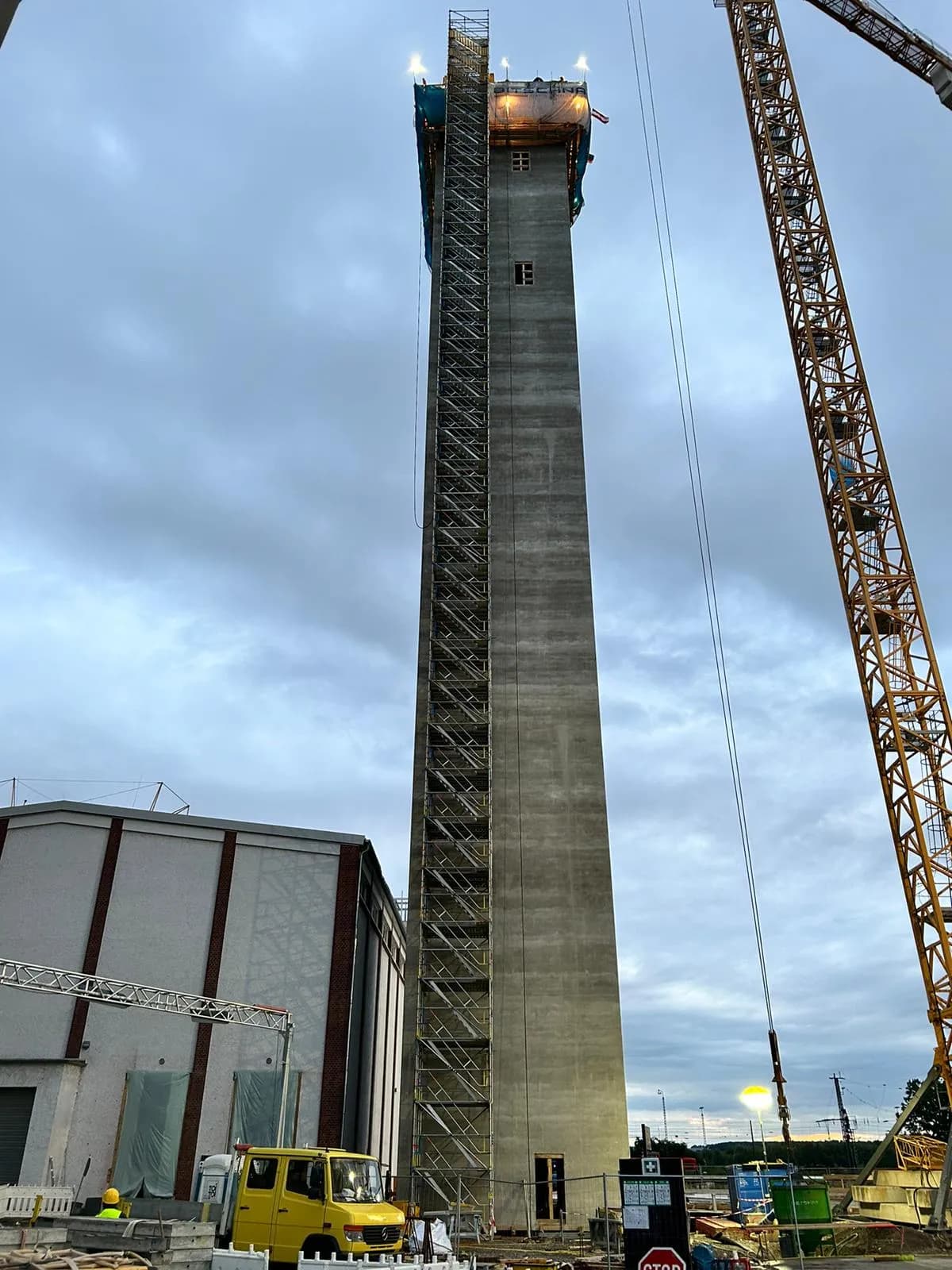
Anchoring follows the anchor grid of the assembly instructions – typically every 4 metres in a staggered pattern, and considerably denser for clad scaffolds (netting, sheeting). Scaffold anchors with ring screws are fixed into load-bearing substrate and pull-tested.
Every working level gets three-part edge protection: guardrail, intermediate rail and toe board. When erecting the topmost lift, fitters work with advance guardrails or personal fall protection – as required by TRBS 2121 and the DGUV rules.
Step 4: Inspection and handover
After erection, a competent person inspects the scaffold: completeness, anchoring, decks, edge protection, marking. Only with an inspection protocol and handover label may the scaffold be used. The user additionally performs a visual check before every use.
The most common mistakes from our practice: missing or late anchoring, incomplete decks on intermediate levels, overloaded lifts, and unauthorised modifications by other trades. All of this can be avoided with clear coordination on site.
Prefer to leave it to professionals?
A properly erected scaffold saves time and protects lives. If you need a well-coordinated Layher or Peri UP crew for your project – as a subcontractor or to reinforce your own team – we are happy to help. Our fitters work to German regulations, with a coordinator directly on site.