
The legal basis: A1, minimum wage, registrations
Reputable EU subcontractors work with A1 certificates for every posted worker, comply with the German sector minimum wage and can fully document their registrations. Ask to see these documents before the project starts – it protects you as the client from liability risks.
Also clarify the form of cooperation: genuine subcontracting (a works contract with own supervision) or temporary agency work. Both are legitimate but have different legal requirements.
Recognising quality: references and systems
Ask for specific reference projects – ideally comparable to your own (facade, industrial, power plant, shutdown). A good partner will name buildings, systems and contact persons. Equally important: experience with the systems common in Germany, such as Layher Allround or Peri UP.
Check the qualifications and safety credentials of the fitters (working at height, personal fall protection). Documented training is a good sign of professional structures.
The decisive factor: coordination and language
Most problems with foreign crews do not arise on the scaffold but in communication. A German-speaking foreman or coordinator directly on site, who aligns schedules, modifications and handovers with your site management, is therefore not a nice-to-have but a requirement.
Clarify availability and response times in advance: how quickly can the crew be scaled up? Who is the contact person in case of absences? Reliable partners answer these questions without hesitation.
How we work at Dobau
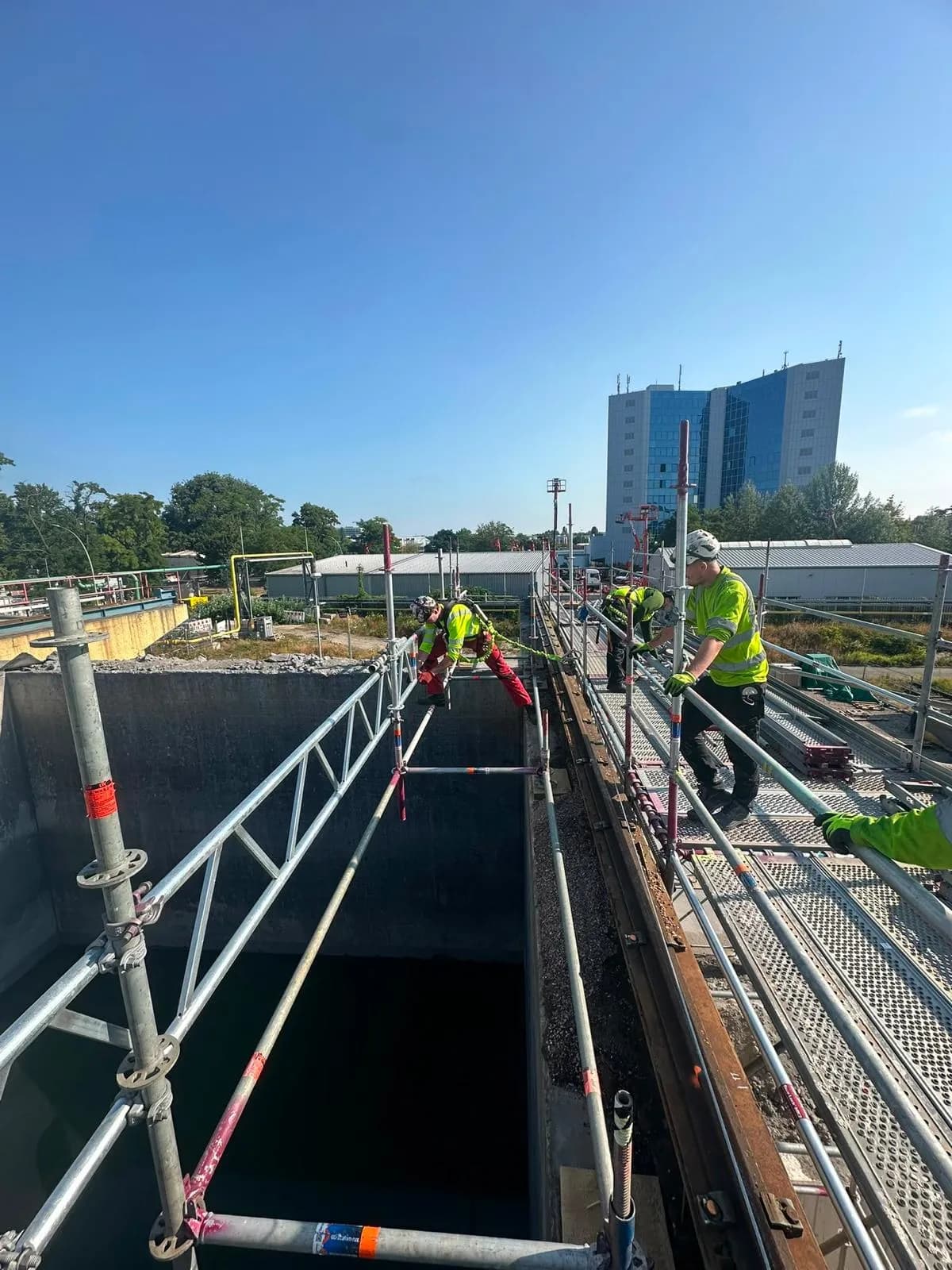
Dobau provides construction companies in Germany, Austria and Sweden with complete scaffolding crews from Slovakia – including a foreman with German language skills, A1 certificates, accommodation and transport. Our teams work with Layher and Peri UP systems, from facades to power plant shutdowns. Describe your project to us – you will usually receive a non-binding offer within 24 hours.